
感谢邀请,Terence Tao 他们团队是研究差不多接近应用数学,他本身研究方向都是一半纯数学一半应用数学,看了一会知乎网友说Terence Tao拿了菲尔兹奖不缺那点钱,我觉得你们误会了。他要养家啊,不管是数学家还是科学家都离不开经费,没有经费或者钱,基本很难的。而且他们团队非常需要钱,他们研究方向是应用。不像我们纯数学,但我们纯数学也需要经费的。IPAM它本身属于接近应用数学了。之前丘老说清华经费太少。我记得这件事。现在他有没有说,我不清楚。因此研究纯数学和应用数学都要经费。这就是科研!菲尔兹奖-奖金:15,000加拿大元=10906.27美元。阿贝尔奖-奖金:600万挪威克朗=588252.00美元。我之前问过Terence Tao有没有兴趣去中国发展,他可能觉得自己母国是澳大利亚而不是中国,而现在,美帝不给他钱了。我在数学界拉过很多数学家的,问他们有没有兴趣去中国发展。大部分可能瞧不上中国吧。没什么好说的。人各有志。今天可能他们瞧不上中国。下次中国可能成为21世纪数学强国。包括很多菲尔兹奖获得者,我都拉过,他们的。人各有志。我拉的都是世界一流的数学家。真正的。包括有很多数学家拿不到菲尔兹奖但是他们也是一流数学家!
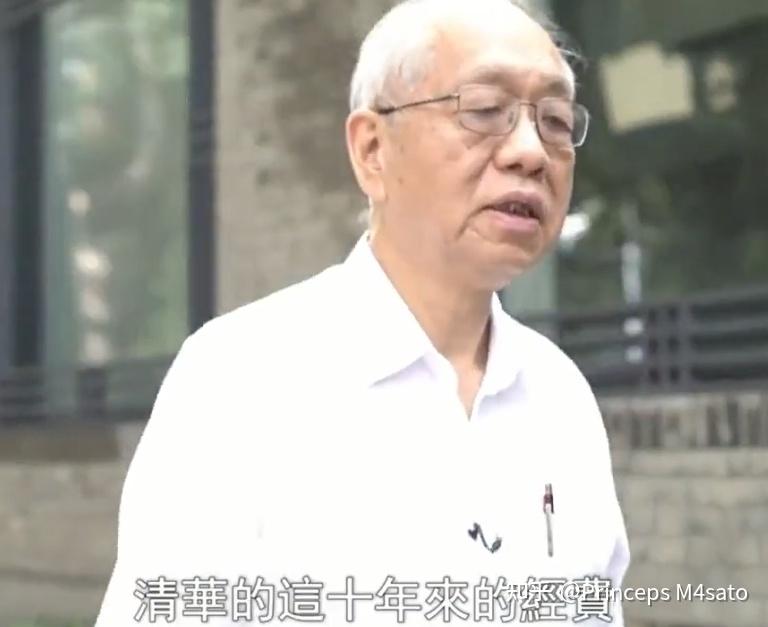



丘之前说大部分数学家不缺钱,我把陶哲轩原话发给他会怎么样呢?我们都知道做基础数学基本没什么钱的,他既然说的这么高大上。
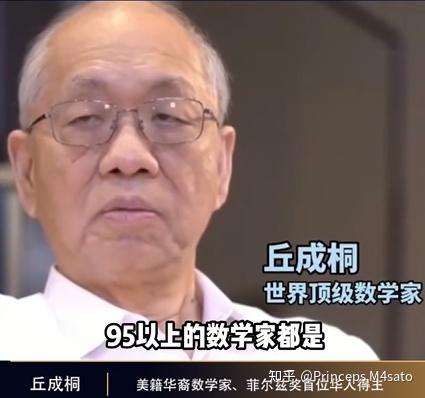
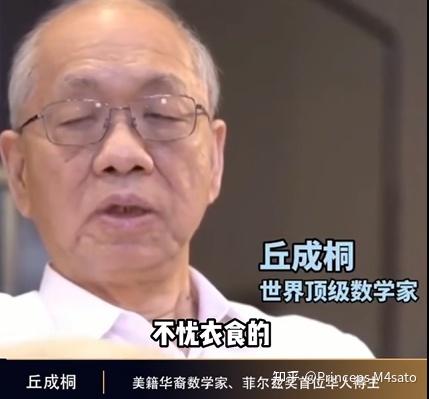
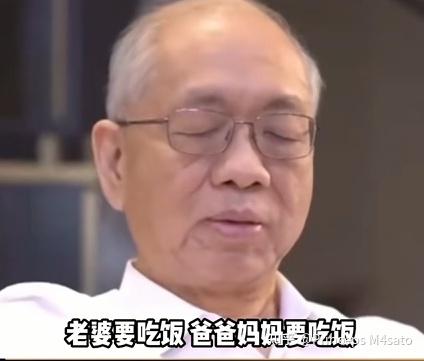
今天带你们认识压缩感知魅力和作用,也就是数学魅力在哪里。数学在我们生活无处不在。
陶哲轩原版:mathstodon.xyz/@tao
The current administration in the US has, through various funding agencies such as the NSF and NIH, has recently suspended virtually all federal grants to my home university, UCLA (including my own personal grant, although that is far from the most serious impact of this decision), on the grounds that UCLA was “failing to promote a research environment free of antisemitism and bias”. One can certainly debate whether these grounds were justified, or whether they merit the extremely draconian damage to the very research environment that this decision is claiming to protect, but if nothing else this unprecedented decision does not appear to have followed the usual standards of due process for actions of this nature; for instance, there appears to have been no good faith effort by the administration to receive a response from UCLA to its allegations before implementing its decision.
The suspension of my personal grant has a non-trivial impact on myself (in particular, my summer salary, which I had already deferred in order to allow the previously released NSF funds to support several of my graduate students over this period, is now in limbo), and now gives me almost no resources to support my graduate students going forward; but this is only a fraction of a percent of the entire amount being suspended. A far greater concern is the impact on the Institute for Pure and Applied Mathematics (IPAM) https://www.ipam.ucla.edu/, which despite receiving preliminary approval earlier this year for a new five-year round of funding (albeit at significantly reduced levels) from the NSF, now only has enough emergency funding for a few months of further operation at best if the suspension is not lifted. (1/4)
中文翻译: 美国现任政府通过国家科学基金会(NSF)和国家卫生研究院(NIH)等多个资助机构,最近几乎中止了对我所在母校——加州大学洛杉矶分校(UCLA)的一切联邦科研拨款(包括我个人的科研资助,尽管这对我而言远不是此决定带来的最严重影响)。政府给出的理由是,UCLA“未能营造一个不含反犹主义与偏见的科研环境”。 是否存在反犹行为、以及这是否足以构成如此严厉、惩罚性极强的制裁手段,本身固然可以辩论。但无论如何,这项史无前例的决定似乎并未遵循此类行动通常应有的正当程序;例如,在执行决定之前,政府方面似乎并未以诚意听取UCLA对相关指控的回应。 我个人的科研项目被叫停,对我本人也有不小的影响(特别是我已将自己的夏季工资推迟发放,以便让NSF已拨付的资金优先用于资助我的几位研究生,而如今这笔工资也陷入不确定状态)。而现在,我也几乎没有资源来继续支持我的研究生。但即便如此,这部分仅占被叫停资金的极小一部分。 更令人担忧的是这一决定对纯与应用数学研究所(IPAM) [https://www.ipam.ucla.edu/] 的影响。尽管IPAM今年早些时候已初步获批下一轮五年期NSF资助(尽管拨款额度已大幅削减),但在目前资助被冻结的情况下,IPAM最多也只能依靠紧急资金维持运作几个月。若拨款暂停迟迟得不到解除,其前景令人深感忧虑。
A followup to my recollections on the early history of compressed sensing from my previous post. Regarding the mathematical contributions of Candes, myself, Romberg, Donoho, and others to the subject, it has been argued that the rigorous theorems that guaranteed with mathematical certainty that compressed sensing algorithms actually worked (assuming three key hypotheses, of which more later) was not as necessary as advertised, since researchers in medical imaging (as well as in other fields, such as seismology, astronomy, and statistics) were empirically discovering very similar algorithms at various times (including some that predate my own work by decades).
This question is one of the main themes of this talk by David Donoho at the 2018 ICM on the occasion of his receiving the Gauss prize: https://www.youtube.com/watch?v=mr-oT5gMboM&ab_channel=RioICM2018 . I recommend the entire talk (and the special shout out to IPAM he gives halfway through, and the role of federal funding more broadly), but can summarize some of the points here. (1/4)
中文翻译:这是我对压缩感知早期历史回忆的后续内容,承接我之前的帖子。关于Candes、我自己、Romberg、Donoho以及其他人对该领域的数学贡献,有人提出一种观点:我们所建立的严格数学定理——即在满足三个关键假设(稍后会谈及)前提下,可以有数学上的确定性保证压缩感知算法的有效性——其实并不像宣传中说得那样“必要”。因为医学成像领域的研究人员(以及地震学、天文学和统计学等其他领域的研究者)在不同时间点上也通过经验手段发现了非常相似的算法,其中一些甚至可以追溯到比我自己工作还早几十年的研究。这个问题正是David Donoho在2018年国际数学家大会(ICM)上领取高斯奖时所作演讲的主要主题之一:点击观看 我推荐大家完整观看这场演讲(他在中途还特别提到了IPAM,以及更广义上的联邦科研资助所起的作用),下面我简要总结演讲中提到的一些要点。(1/4)
In this case, what the mathematical theorems brought to the field was a clarity, insight, generality, and level of trust that was not being produced just from the empirically derived results alone. In many cases, the observed efficiencies of compressed sensing type algorithms that had been empirically reported could not be reliably reproduced by other researchers, for a number of reasons, but one of which was that the key insight that compressed sensing required *three* crucial ingredients to work (sparse representation of data, incoherent sampling, and nonlinear reconstruction), and would fail if only one or two of these ingredients was present, was not clearly communicated in these works. The empirical results may have mentioned one or two of these ingredients as a possible speculative explanation of the compressed sensing phenomenon, but it required mathematical analysis to identify all three, and to clarify the types of measurement problems for which compressed sensing could work, and the ones for which it would not. (2/4)
中文翻译:在这种情况下,数学定理为该领域带来了清晰性、洞见、普遍性以及一种单靠经验结果所无法提供的信任程度。许多时候,那些关于压缩感知类算法的经验性效率报告并不能被其他研究者可靠地重复验证,原因有很多,其中之一就是一个关键性认识没有被明确传达:压缩感知要有效,必须具备三个关键要素——数据的稀疏表示、非相关采样以及非线性重构——而只具备其中一项或两项都是不够的。这些经验性研究可能会提到其中一两个要素,并将其作为对压缩感知现象的某种猜测性解释,但唯有借助数学分析,才能识别出所有三个要素,并澄清哪些类型的测量问题适用于压缩感知,哪些则不适用。
Addendum: the situation with compressed sensing can be compared with the current situation with modern large language models and related AI tools. Here, the field is almost entirely dominated by empirical research, often from industry rather than from academics. As such, there is a lot less clarity on what the key ingredients are to make a given AI technology suitable for a given use case; there are spectacular successes that cannot be replicated, next to seemingly promising uses that hit an unexpected wall (or, conversely, unlikely applications for which AI tools are far more effective than anticipated). With the notable exception of the mathematics of optimization and numerical linear algebra which are both somewhat mature, most of the theoretical mathematical framework needed to explain the strengths and weaknesses of AI is still in its infancy. (Though I would say here that the main bottleneck is not exactly lack of funding in basic research in the foundations of AI, but more that the mathematics itself is not understood to anywhere near the level we would like.)
中文翻译:补充说明:压缩感知的发展状况可以与当前大型语言模型及相关人工智能工具的发展现状进行类比。在人工智能领域,研究几乎完全由经验驱动,且往往更多来自工业界而非学术界。因此,我们对某项 AI 技术是否适用于某个具体场景,其关键要素究竟是什么,仍缺乏清晰的认知。我们既看到一些令人惊艳却无法复现的成功案例,也看到一些看似前景广阔的应用最终遭遇意外的瓶颈(反过来也存在一些原本不被看好的领域,AI 工具却表现出了远超预期的效果)。除了优化数学和数值线性代数这两个相对成熟的方向外,用以解释 AI 优势与局限性的理论数学框架整体上仍处于起步阶段。(不过我认为,目前的主要瓶颈倒并不是基础 AI 理论研究缺乏资金支持,而是我们对其所需的数学本身的理解程度,远未达到理想的水平。)
This was quite a practical consideration, since in order for the manufacturers of expensive MRI machines (Siemens, GE, Phillips, Toshiba, etc.) to actually invest significant R&D resources into trying to implement compresssed sensing algorithms into their latest models (which they have all now done), they needed a high level of assurance that they would not run into fundamental obstacles in actually making the theoretical arguments work in practice. Here, it was not just any individual theorem produced by myself or others, but the remarkable breadth of compressed sensing results in the mathematical signal processing literature (using quite diverse areas of mathematics to reach the same conclusions), as well as empirical compressed sensing experiments in other disciplines that the mathematics now indicated were analogous to the medical imaging context, that were key in persuading these companies that the risks were low enough that it made fiscal sense to actually make the needed investments. (3/4)
中文翻译:这是一个相当实际的考量。因为对于那些生产昂贵MRI机器的厂商(如西门子、通用电气、飞利浦、东芝等)来说,是否愿意投入大量研发资源,将压缩感知算法应用于其最新型号的设备(他们现在确实都已经这么做了),取决于他们是否能获得高度的保障,即这些理论论证在实践中不会遇到根本性的障碍。在这里,起关键作用的并不仅仅是我自己或他人提出的某一个定理,而是压缩感知在数学信号处理文献中展现出的惊人广度——这些结果借助了来自多个不同数学分支的方法,却得出了相同的结论——再加上其他学科中进行的压缩感知实验,而数学分析表明这些实验的情境与医学成像是类比的,正是这些因素使得这些公司相信其面临的风险足够低,从而在财政上有足够理由进行所需的投资。
Another key input that the mathematical analysis added to the subject was that of abstraction. Already by the 1970s, the seismologist Jon Claerbout, working with the Stanford Exploration Project, had developed a technique to more accurately perform seismic imaging, that nowadays is viewed as a prototype of modern compressed sensing algorithms. However, their results were presented within the framework of seismology, and had very little impact outside of that field; to the extent that other scientists were aware of it at all, they may have believed it to be some sort of special "trick" that was specific to the seismology context that could not be transferred to, say, astronomy or medical imaging.
By reformulating the measurement problem into the abstract language of linear algebra - which is part of the mathematical language common to all the sciences - and through the efforts of several key scientists in translating this language into terms that could be easily grasped by experts in various scientific domains - it became possible to persuasively communicate the essential insights of compressed sensing across disciplines, and in particular to unlock the otherwise field-specific nuggets of understanding that isolated research communities had uncovered, and share them far more broadly. All in all, compressed sensing is a great success story involving the collaboration of mathematicians, scientists, engineers, industry, and public funding agencies, that I am very proud to have contributed to; and the return on public investment has been substantial (especially on the pure mathematical side, as research expenses here tend to be somewhat lower than in other scientific disciplines). (4/4)
中文翻译:数学分析为这一领域带来的另一个关键贡献是抽象能力。早在 1970 年代,地震学家 Jon Claerbout 就在斯坦福勘探计划(Stanford Exploration Project)中开发出一种更为精确的地震成像技术,而如今这种技术被视为现代压缩感知算法的原型。然而,当时他们的成果是以地震学的框架呈现的,在该领域之外几乎没有产生影响。即便其他领域的科学家有所耳闻,也可能会认为这只是一种特定于地震学背景的“技巧”,无法推广到天文学或医学成像等其他应用中。通过将测量问题重新表述为线性代数中的抽象语言——而线性代数是所有科学学科共通的数学语言之一——再加上一些关键科学家们的努力,他们把这种抽象语言翻译成各个专业领域的专家也能轻松理解的术语,从而使得压缩感知的核心思想能够跨学科地被有效传达。尤其重要的是,这使得原本零散地存在于各个独立研究群体中的、仅在各自领域内流通的洞见得以被广泛分享与应用。总的来说,压缩感知是一个极具代表性的成功案例,体现了数学家、科学家、工程师、产业界和公共资助机构之间的协同合作。我很自豪自己能为此做出贡献;而在回报方面,这一领域的公共投资也收获颇丰(尤其是在纯数学方面,因为相比其他科学学科,这里的研究开销通常要低得多)。
IPAM (pictured here in a photo I took today), as one of the six NSF-funded math institutes, has been a great success since its founding in 2000. Its specialty is creating three-month programs where participants (both junior and senior) from two or more fields of mathematics, science, or industry interact through workshops, participant-driven seminars, and informal interactions, centered around a theme that had been identified as particularly fertile for bringing together two or more otherwise disparate communities.
One well-known example that I was involved many years ago was the 2004 program https://www.ipam.ucla.edu/programs/long-programs/multiscale-geometry-and-analysis-in-high-dimensions/ on Multiscale geometry and analysis in high dimensions, where the organizers had identified the potential for bringing together pure mathematicians whose work involved geometry at multiple scales with scientists interested in such applied topics as signal processing or the accurate modeling of materials. I participated extensively in this program, and in particular interacted quite a bit with one of the organizers (Emmanuel Candes) as well as Justin Romberg, leading to several foundational papers in the field now known as "compressed sensing", which permits (in certain circumstances) the rapid acquisition of high-resolution images or other information from a relatively small number of measurements. (Perhaps the most well known applications of the compressed sensing algorithms that came out of the work of Emmanuel, myself, Justin, David Donoho, and others was the ability to speed up the time required for a medical-grade MRI scan by up to an order of magnitude.) (2/4)
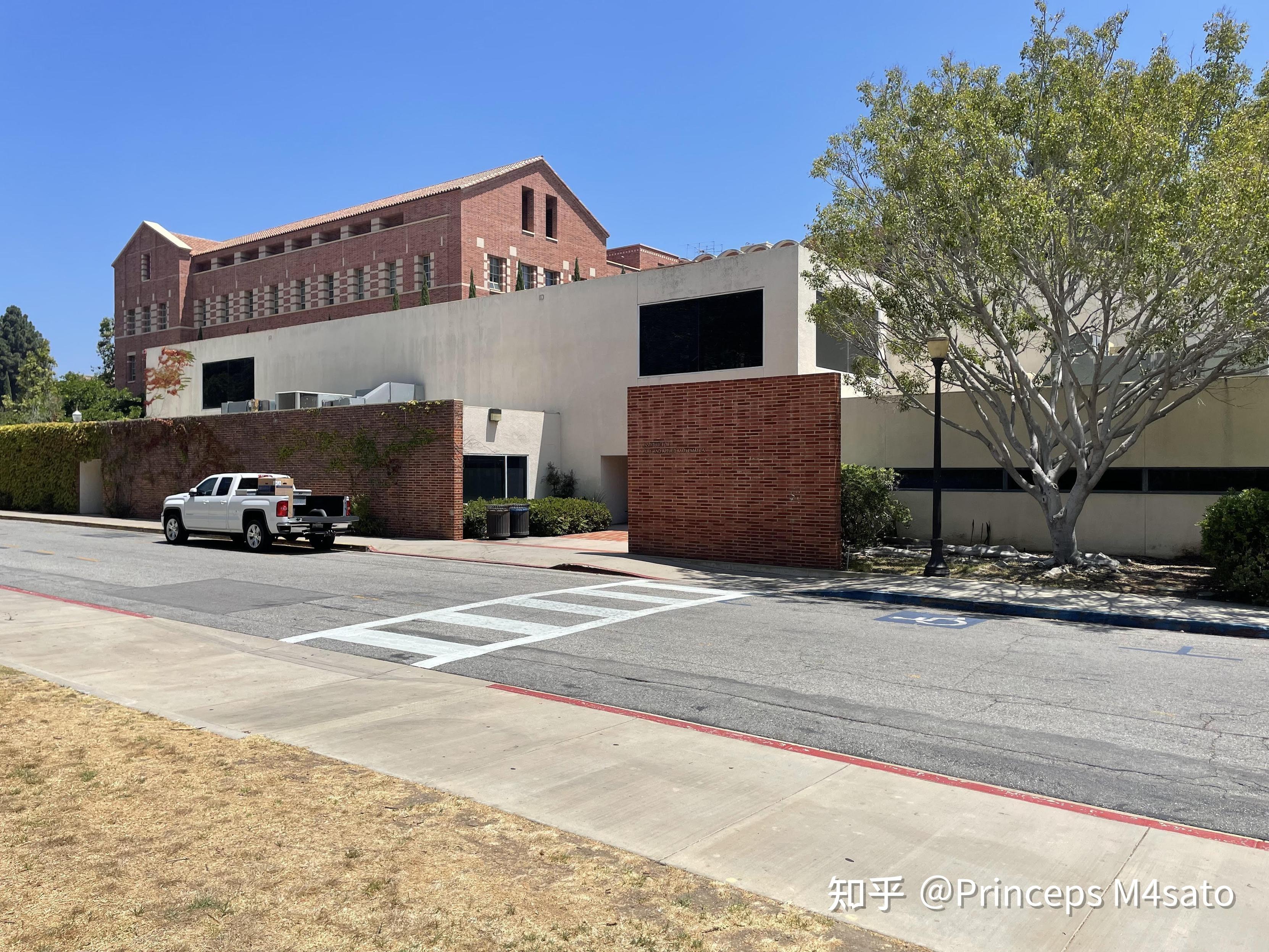
中文翻译:IPAM(我今天拍摄的照片中所示)是美国国家科学基金会(NSF)资助的六个数学研究所之一,自2000年成立以来取得了巨大成功。其特色是组织为期三个月的学术项目,邀请来自两个或更多数学、科学或工业领域的参与者(包括资深与初级学者),围绕一个被认为极具潜力、能够将原本分属不同领域的研究者汇聚起来的主题,通过专题研讨会、由参与者主导的讲座,以及非正式的交流互动展开深入合作。我曾参与的一个广为人知的项目是2004年举办的 “高维多尺度几何与分析”(Multiscale Geometry and Analysis in High Dimensions)项目:链接在此。当时组织者识别出一个契机:可以把研究多尺度几何的纯数学家,与关注信号处理或材料精确建模等应用问题的科学家联合起来。我在这个项目中深度参与,尤其与组织者之一 Emmanuel Candès 以及 Justin Romberg 有了大量互动,这些互动后来促成了多个压缩感知(compressed sensing)领域的奠基性论文。所谓“压缩感知”,是指在特定条件下,能够通过相对较少的测量快速获取高分辨率图像或其他信息的技术。我们(Emmanuel、我、Justin、David Donoho 以及其他人)的相关工作最终发展出了压缩感知算法,其中最知名的应用之一,就是显著加快医学级别核磁共振成像(MRI)扫描的速度,提速幅度可达一个数量级。
(2/4)
Some accounts claim that Emmanuel and I actually started collaborating at the preschool that both of our children attended at the time, but the truth is that our main collaboration actually started at IPAM; the fact that we met on a near-daily basis at the preschool was very useful to continue the collaboration, but it was not exactly an ideal environment to initiate it.
I have been involved in several other very interesting IPAM programs since then; for instance, in 2023 I was the lead organizer in an IPAM-hosted workshop on Machine Assisted Proof https://www.ipam.ucla.edu/programs/workshops/machine-assisted-proofs/, which turned out to be a very well-timed event (occurring a few months after the launch of ChatGPT, for instance), bringing together pure mathematicians, computer scientists, and several people from industry and opening important channels of communication between researchers in such topics as proof formalization, machine learning, large language models, computer algebra solvers, and satisfiability solvers. (I previously posted on my experiences at that workshop at https://mathstodon.xyz/@tao/109858184238417737 .) My experiences at that workshop, as well as the connections made, permitted me to get up to speed on the latest developments in all of these areas, which now encompass a large portion of my current research interests. (3/4)
中文翻译:有一些说法称我和 Emmanuel 的合作其实是从我们孩子当时就读的同一所幼儿园开始的,但事实是,我们的主要合作其实是在 IPAM 才真正启动的。当然,我们几乎每天都会在幼儿园碰面,这确实有助于合作的持续推进,但幼儿园显然并不是一个理想的起点环境。自那以后,我还参与了 IPAM 举办的多个非常有意思的项目。例如在 2023 年,我担任了 IPAM 主办的一个研讨会 ——“机器辅助证明”(Machine Assisted Proof)——的首席组织者:点击查看链接。这个研讨会的时机可谓非常契合(例如,它是在 ChatGPT 发布几个月之后举办的),将纯数学家、计算机科学家以及来自工业界的研究人员汇聚一堂,在诸如证明形式化、机器学习、大语言模型、计算机代数求解器、可满足性求解器等领域的研究者之间建立起了重要的交流通道。我此前也曾在 Mathstodon 上发布过 关于此次研讨会的参与经历。这次研讨会的参与经历,以及由此建立的人脉联系,使我迅速掌握了上述各个方向的最新发展动态,而这些方向现在已经涵盖了我当前大部分的研究兴趣。
(3/4)
But perhaps the biggest positive contributions of institutes such as IPAM is not on senior faculty such as myself (who often have other resources and connections to draw upon), but on early career researchers, especially those from less well known institutions who might not otherwise have many opportunities to interact with the researchers at the emerging interface between two or more fields that were just beginning to become interconnected. When I was a postdoc, I experienced that opportunity myself in 1997 at a different NSF-funded institute (MSRI, now known as SLMath) in a program https://www.slmath.org/programs/60 on harmonic analysis, which was instrumental in setting up several extremely productive collaborations in my early career. Many of my colleagues and collaborators can also testify to positive early-career experiences in such institute programs as similarly unlocking their own research potential. Losing one of these institutes would have major negative impacts on the next generation of mathematical scientists.
(Disclosure: I am scheduled this year to become Director of Special Projects at IPAM, taking over from Stanley Osher.) (4/4)
中文翻译:但也许像 IPAM 这样的研究机构所带来的最大正面影响,并不是体现在我这样的资深教授身上(我们通常还有其他资源和人脉可以依靠),而是对早期职业阶段的研究人员,尤其是那些来自名气不大的院校、原本可能没有太多机会与前沿交叉领域研究者接触的青年学者。对于这些人来说,IPAM 提供了一个与其他学科交界处的研究者深入交流的极为宝贵的平台——这些学科交界往往正是新兴突破正在酝酿之处。我自己在1997年博士后阶段就亲身经历过类似的机会,当时我参与了另一个 NSF 资助研究机构(MSRI,现在称为 SLMath)举办的一个项目:调和分析项目。该项目对我早期学术生涯中的多个高产合作起到了关键性的推动作用。我的许多同事和合作者也可以证实,他们在这些研究所项目中的早期参与经历,同样极大激发了他们的研究潜力。如果这些研究机构中有任何一个失去支持,都会对下一代数学科学家的成长造成重大负面影响。(附注:我计划今年出任 IPAM 的“特别项目主任”(Director of Special Projects),接替 Stanley Osher 的职位。)
(4/4)
五天前UCLA写了一篇公告,The Loss of Federal Funding is a Loss for America
Chancellor Frenk shared a message with the Bruin community.
Dear Bruin Community:
UCLA received a notice that the federal government, through its control of the National Science Foundation (NSF), the National Institutes of Health (NIH) and other agencies, is suspending certain research funding to UCLA. This is not only a loss to the researchers who rely on critical grants. It is a loss for Americans across the nation whose work, health, and future depend on the groundbreaking work we do.
To explain what I mean, I’d like to share a story. Thirteen years ago, Dr. Abbas Ardehali — a UCLA professor who leads groundbreaking research at the Heart and Lung Transplant Program in our Division of Cardiothoracic Surgery — changed the future of transplant medicine. He performed the first-ever lung transplant using the Organ Care System, a technology that keeps lungs breathing outside the body while they wait to be transplanted.
Dr. Ardehali had a simple but radical belief: that we could save more lives if we stopped transporting organs on ice in drugstore coolers and instead kept them alive. He was right. Today, he and his team continue to push boundaries in transplant medicine research — not just preserving organs, but reviving and repairing them. That work is saving lives every day for ordinary Americans, veterans and our dedicated servicemembers.
And the first person to benefit from Dr. Ardehali’s breakthrough? Not a well-connected diplomat or tycoon, but a local grandfather and carpenter — someone who helped build the very Ronald Reagan UCLA Medical Center where his life was saved.
This story captures so much of what UCLA stands for: life-changing research, driven by compassion and shared with the world. What we discover and create here — with the help and support of grants such as those from the NSF and NIH — doesn’t just stay within the walls of our labs or lecture halls. It reaches real people and real lives across this nation, often in the most transformative ways.
Great universities are connective, forging links across disciplines and communities, bridging divides with empathy and insight. They are impactful, translating discoveries into action, and ideals into progress. UCLA is a truly great university, as evidenced by the connections we create and lives we improve — not just of those who study on our campus, but of<a href="https://whttp://ww.ucla.edu/research"> people everywhere.
You can see that in so many parts of our research:
- Our planetary scientists, supported by the NSF and NASA, are searching for asteroids and other objects in space that could threaten Earth.
- Our Valley Fever Center, funded by the NIH, is working to better understand and treat the deadly invasive disease for which it is named.
- UCLA researchers helped create the Internet with support from the Department of Defense, and are now building new technologies that could fuel entire industries and help safeguard our soldiers.
This progress comes from a uniquely American idea: that public research universities, backed by federal support, can move our nation and all of civilization forward.
That is why the news we received is so deeply disappointing. With this decision, hundreds of grants may be lost, adversely affecting the lives and life-changing work of UCLA researchers, faculty and staff. In its notice to us, the federal government claims antisemitism and bias as the reasons. This far-reaching penalty of defunding life-saving research does nothing to address any alleged discrimination.
We share the goal of eradicating antisemitism across society. Antisemitism has no place on our campus, nor does any form of discrimination. We recognize that we can improve, and I am committed to doing so. Confronting the scourge of antisemitism effectively calls for thoughtfulness, commitment, and sustained effort — and UCLA has taken robust actions to make our campus a safe and welcoming environment for all students.
Earlier this year, we took concrete action by creating a new Office of Campus and Community Safety, instituting new policies to manage protests on campus, and taking decisive action for conduct that violates our policies.
We also launched an Initiative to Combat Antisemitism that is mobilizing our broad community to extinguish antisemitism completely and definitively. This is a standing initiative reporting directly to me.
As part of this initiative, UCLA is implementing recommendations of the Task Force to Combat Antisemitism and Anti-Israeli Bias. These include enhancing relevant training and education, improving the complaint system, ensuring enforcement of current and new laws and policies and cooperating with stakeholders.
These initiatives are deeply personal to me. My paternal grandparents left Germany in the 1930s with my father, who was 6 years old, and my aunt, who was 4. They were driven out of their home by an intolerable climate of antisemitism and hate. Members of my family who did not make that decision perished. My wife is the daughter of a Holocaust survivor, whose family was murdered in the concentration camps.
That history is part of what drew me to UCLA. Our university was founded on the principle that everyone, no matter their background, deserves the freedom to learn and use that knowledge to make this world a better place. With the support of our government at all levels, UCLA’s research, innovation and education does that every day, benefiting Americans across the nation.
Let me be clear: Federal research grants are not handouts. Our researchers compete fiercely for these grants, proposing work that the government itself deems vital to the country’s health, safety and economic future. Grants lead to medical breakthroughs, economic advancement, improved national security and global competitiveness — these are national priorities.
UCLA has an obligation to ensure that the resources entrusted to us by society add maximum value back to society.
For the past several months, our leadership team has been preparing for this situation and have developed comprehensive contingency plans. We will do everything we can to protect the interests of faculty, students and staff — and to defend our values and principles. With the support of the UC Board of Regents and the UC Office of the President, we are actively evaluating our best course of action. We will be in constant communication as decisions move forward.
Our motto is Fiat Lux: Let there be light.
I see that light all around us: In the patient that Dr. Ardehali treated who got a second chance to hold his grandchildren, in the students who come from all walks of life with big dreams and bold ideas, in the quiet determination of researchers working late into the night on solutions that could change everything.
Fiat Lux isn’t just a phrase on our seal. It is a promise — to keep shining light where it is needed most.
Much is at stake, but UCLA has faced defining moments before. And we have always met them with courage, resilience and resolve.
We are One UCLA.
Julio Frenk
Chancellor